Top 5 Modbus TCP to BACnet Solutions for Smart Building Control?
In the age of smart buildings, seamless communication between different systems is crucial. One common challenge is integrating protocols, particularly Modbus TCP and BACnet. Modbus TCP to BACnet solutions play a vital role in ensuring devices from different manufacturers work together effectively. This integration enhances energy efficiency and streamlines management processes in modern buildings.
By connecting Modbus TCP devices to BACnet networks, building managers can gain valuable insights. These insights help in monitoring performance and automating systems. However, selecting the right solution can be daunting. Many options exist, each with unique features and compatibility considerations. Some solutions excel in ease of use, while others might prioritize advanced functionalities.
The best approach is to understand specific needs and limitations. Solutions can vary in reliability and effectiveness. Thus, careful evaluation is essential. A deeper understanding of how Modbus TCP to BACnet integration works will lead to better decision-making. This ensures that your smart building operates efficiently and meets its goals. Exploring these top solutions can help bridge the gap between systems and improve overall performance.

Overview of Modbus TCP and BACnet Protocols
Modbus TCP and BACnet are two prevalent protocols in the world of smart building control. Modbus TCP is widely used in industrial environments. It enables communication between devices over a network. This protocol is known for its simplicity and ease of integration. BACnet, on the other hand, is designed specifically for building automation. It supports various system components like HVAC and lighting. The interoperability of BACnet enhances scalability in complex systems.
Understanding these protocols is crucial. Modbus TCP is often favored for its straightforward architecture. It efficiently manages data exchange but lacks some advanced features. BACnet provides a richer set of capabilities, allowing for more sophisticated interactions. However, implementing BACnet can complicate initial setups. There are trade-offs when choosing between them. It's important to consider factors like existing infrastructure and user needs.
Many building managers face challenges when integrating these protocols. Compatibility issues often arise, and some devices may not support both. Finding a solution that efficiently bridges Modbus TCP and BACnet is essential. Consideration of installation cost versus long-term benefits is vital. Balancing simplicity and functionality can be tricky. Thoughtful planning leads to improved operation in smart building systems.
Top 5 Modbus TCP to BACnet Solutions for Smart Building Control
This chart compares the performance scores of the top 5 Modbus TCP to BACnet solutions for smart building control, highlighting their effectiveness in integrating these two protocols.
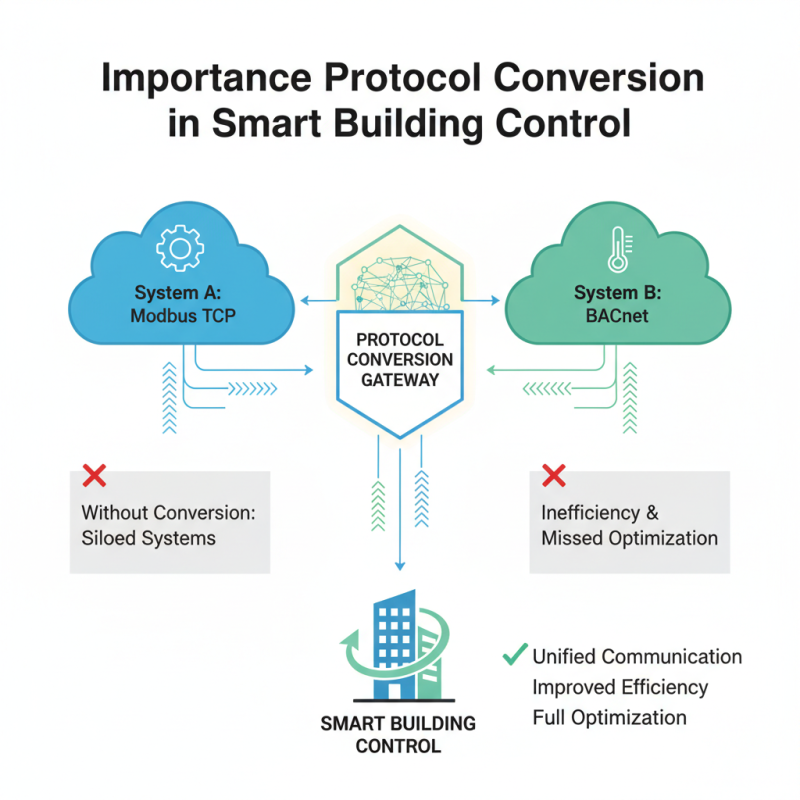
Importance of Protocol Conversion in Smart Building Control
In the realm of smart building control, protocol conversion is crucial. Different systems communicate using distinct protocols. Modbus TCP and BACnet are among the most common. However, without effective protocol conversion, these systems cannot work together. This gap can lead to inefficiencies in building management and missed opportunities for optimization.
Specializing in protocol conversion allows for the integration of various devices and systems. This ensures seamless communication and data exchange. For instance, HVAC systems, lighting controls, and sensors rely heavily on accurate data to function optimally. Additionally, the ability to monitor energy usage and environmental conditions in real-time offers valuable insights. Nevertheless, converting between protocols is not without challenges. Compatibility issues can arise, potentially causing delays or increasing complexity.
Investing in reliable protocol converters fosters system interoperability. Ensuring devices talk to each other enhances functionality and improves user experience. Building managers should carefully evaluate their needs and the existing infrastructure. Taking time for research can lead to better decision-making. Challenges do exist, yet the benefits often outweigh them. Efficient control systems increase energy efficiency and occupant comfort, vital in today's energy-conscious world.
Criteria for Selecting Modbus TCP to BACnet Solutions
When selecting Modbus TCP to BACnet solutions, several key criteria come into play. Compatibility is paramount. Ensure the solution can bridge communication between devices seamlessly. Investigate if it supports various Modbus configurations and BACnet object types, as these factors greatly influence performance.
Reliability also matters. Solutions should demonstrate consistent uptime and robustness against data loss. Look for systems that utilize error-checking and recovery features. This tends to result in a more stable network environment.
Tips: Always test solutions in a controlled environment before fully integrating them. Regularly audit performance to catch potential issues early.
Cost-effectiveness is another consideration. While some solutions may offer a lower initial price, hidden costs can arise later on. Evaluate the total cost of ownership, including maintenance and support. Make sure you factor in long-term usage.
In addition, user interface and support can set apart good solutions. A straightforward interface facilitates quick learning. Efficient customer support ensures timely help if issues arise. It’s wise to assess these factors before committing to a solution.
Top 5 Modbus TCP to BACnet Solutions for Smart Building Control
| Solution Name |
Compatibility |
Performance |
Scalability |
User Friendliness |
| Solution A |
Modbus TCP, BACnet IP |
High |
Excellent |
Very Easy |
| Solution B |
Modbus TCP, BACnet MS/TP |
Moderate |
Good |
Moderate |
| Solution C |
Modbus TCP, BACnet IP |
High |
Good |
Easy |
| Solution D |
Modbus TCP, BACnet IP, BACnet MS/TP |
Very High |
Excellent |
User-Friendly |
| Solution E |
Modbus TCP |
Moderate |
Fair |
Complex |
Top 5 Recommended Modbus TCP to BACnet Solutions
Integrating Modbus TCP and BACnet protocols can greatly enhance smart building control. Several solutions have emerged, each offering unique features to streamline this process. Effective communication between devices is essential. A reliable gateway can facilitate smooth data flow, making systems more interoperable.
When selecting a solution, consider the specific needs of your building. It’s crucial to evaluate the environment where devices operate. Some gateways might perform well in stable settings, but face issues in complex, dynamic situations. Pay attention to compatibility with existing systems. Not all solutions handle diverse devices equally.
Documentation and support are key factors. Access to comprehensive guides can ease installation and troubleshooting. Technical support from providers can also make a significant difference. However, some might experience delays in response time. It’s important to assess past user experiences to understand potential shortcomings.
An ideal solution balances performance and reliability, ensuring efficient building management.